
01 — Generative engine optimization
Generative engine optimization
People now ask an assistant instead of typing a query.
Being the source an AI cites is a different job from ranking first, and it rewards a different kind of page.
AI search optimization, or GEO, is the work of making your content the source that ChatGPT, Gemini, Perplexity and Google AI Overviews cite when someone asks about what you do. It rewards pages that answer a question completely and verifiably in one place, and it sits on top of conventional SEO rather than replacing it.
What is included
What is included
- Answer-first pages
- Schema parity
- Citable claims
02 — Detail
What assistants actually reward.
A language model summarising an answer needs a passage it can lift and attribute. That favours pages where the answer sits near the top, stated plainly, without requiring the reader to assemble it from four scattered paragraphs.
It also favours claims that can be checked. Specific numbers, named sources, dates, and consistency between what the page says in text and what it declares in structured data. A contradiction between those two is reason enough to be skipped.
None of this replaces the fundamentals. The crawl still has to reach the page and the domain still needs to be worth citing, which is why this work runs alongside technical SEO and content SEO rather than instead of them.
03 — How it works
What the work involves.
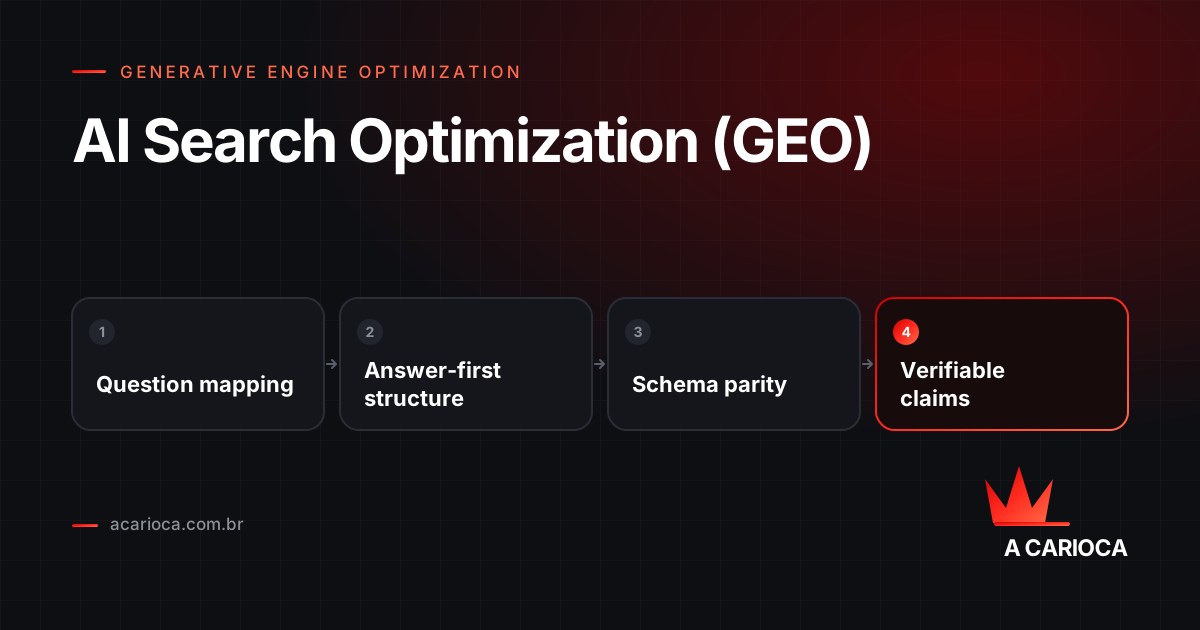
- 01
Question mapping
What people actually ask an assistant about your category, in full sentences.
- 02
Answer-first structure
Each page opens with a complete, self-contained answer before the supporting detail.
- 03
Schema parity
Structured data matching the visible text exactly. Mismatches get pages discarded.
- 04
Verifiable claims
Specific and checkable beats broad and confident. Vague marketing language does not get cited.
- 05
Monitor
What assistants say about your category, and where their citations come from.
04 — Fit
Who AI search optimization is for.
It fits companies in categories people now ask assistants about: which provider to choose, how a service works, what something costs, whether an approach is worth it. If your customers ask ChatGPT, Gemini or Perplexity before they search Google, being the cited source is the new first page.
It fits sites with conventional SEO in reasonable shape, because the crawl still has to reach the page and the domain still has to be worth citing. It fits businesses with real expertise to state plainly, since assistants reward verifiable, specific claims over marketing language.
It is a poor fit as a replacement for SEO, and we say so. GEO sits on top of the fundamentals; it does not skip them. It is also not a guarantee: there is no submission form and no paid placement for AI answers.
05 — Common mistakes
The mistakes we correct first.
- The answer buried in paragraph four. Assistants lift a passage they can attribute. The complete answer belongs at the top.
- Claims that cannot be checked. Vague superlatives are not cited. Numbers, sources and dates are.
- Structured data that disagrees with the text. A contradiction between schema and visible content is grounds to be skipped.
- Blocking AI crawlers by accident. A robots rule copied from somewhere else can remove you from every assistant at once.
- Measuring nothing. Referral traffic from assistant domains and what assistants say about your category can be tracked, imperfectly but honestly.
The pages that get cited are the ones that would also rank: complete, specific and consistent. GEO is mostly the discipline of writing that way on purpose.
06 — Measurement
How we measure and report.
Referral traffic from assistant domains, periodic checks of what the major assistants say about your category and whether they cite you, and the conventional SEO metrics the work depends on. We report only what can be verified and say plainly that measurement in this area is still incomplete.
Each page optimised is documented with the question it answers and the claim it makes, so the content map covers assistants as well as search engines.
07 — Questions
Technical guides
Related services
Next step
Want to be the answer, not a link?
Tell us what your company does and we will show you how assistants describe your category today.
- WhatsApp · +55 24 99929-8231
- Email · [email protected]
- Volta Redonda, Brazil · remote worldwide