
01 — E-commerce SEO
E-commerce SEO
In most stores, category pages carry the traffic.
Product pages convert, but category pages are usually what people actually search for.
E-commerce SEO is the work of making an online store findable: structuring category pages around how people search, getting product pages indexed with content worth indexing, and controlling the filter and variant URLs that quietly multiply into thousands of near-duplicates.
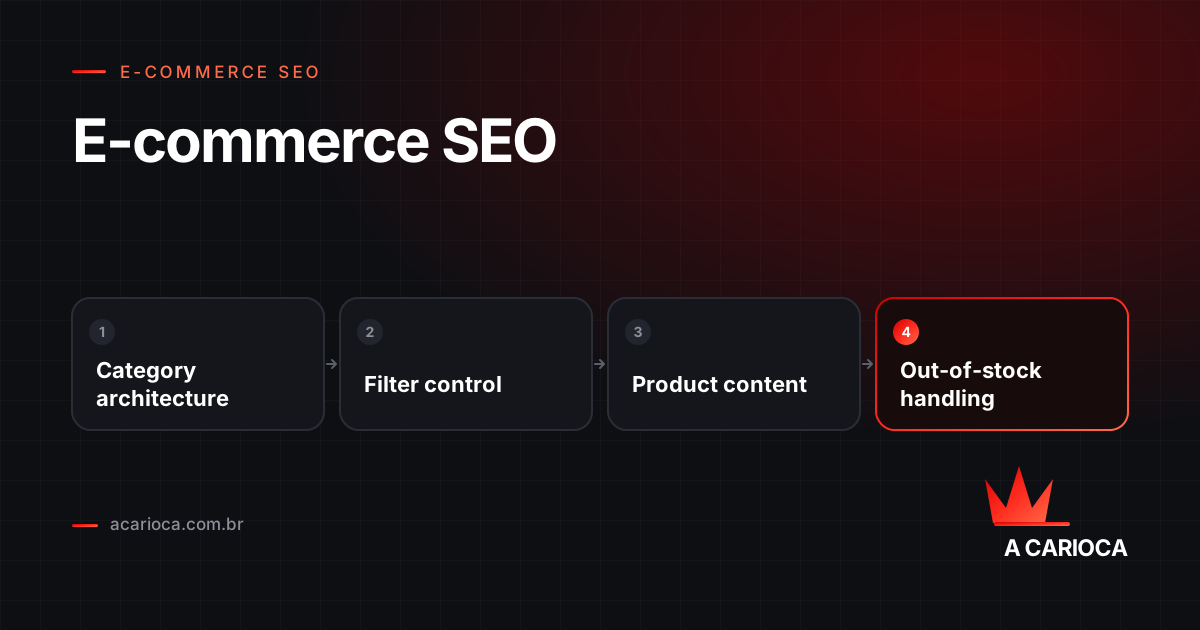
What is included
What is included
- Category architecture
- Filter control
- Product content
02 — Detail
Where stores go wrong in search.
Most stores optimise product pages and neglect categories, which is backwards. People search for the category far more often than for a specific product, and the category page is where a store can genuinely compete.
Manufacturer descriptions copied across every retailer are the second problem. If your product page contains the same paragraph as two hundred other stores, Google has no reason to prefer yours, and often will not index it at all.
Faceted navigation is the third and most technical. Filters combining colour, size and price can generate tens of thousands of URLs from a few hundred products, splitting authority and consuming crawl capacity. Fixing that is technical SEO work with a direct revenue consequence.
03 — How it works
How we approach a store.
- 01
Category architecture
Categories named and structured around how people actually search.
- 02
Filter control
Deciding which filter combinations should be indexable and blocking the rest.
- 03
Product content
Unique descriptions, prioritised by what actually sells.
- 04
Out-of-stock handling
Discontinued products handled without deleting the authority they earned.
- 05
Structured data
Product markup with price and availability accurate and current.
04 — Fit
Who e-commerce SEO is for.
It fits online stores that depend on paid traffic and want organic to carry part of the load, stores with a catalogue large enough that category pages can rank for real demand, and stores whose organic traffic dropped after a platform change or a filter explosion.
It fits marketplaces sellers moving to their own store, and brands with products people search for by name. It fits particularly well when there is a content plan for categories and buying guides, because product pages alone rarely rank for anything but the product name.
It is a poor fit for stores with a handful of products and no search demand for the category, where paid channels reach customers faster, and for stores that cannot write unique product content. We say which applies before proposing anything.
05 — Common mistakes
The mistakes we correct first.
- Categories neglected for products. People search the category far more than the product. The category page is where the store competes.
- Faceted navigation left unmanaged. The largest source of duplicate URLs in most stores. Deliberate decisions about which combinations index.
- Copied manufacturer text. Often not indexed at all. Unique descriptions, prioritised by revenue.
- Out-of-stock pages deleted. Discarding the authority and links they earned. Redirect or keep with a return date.
- Product schema with stale price or availability. It has to match the page, or it is ignored or penalised.
A store that indexes cleanly and ranks for its categories lowers its dependence on paid traffic month by month, which is the point of the work.
06 — Measurement
How we measure and report.
Organic revenue and orders, organic traffic by category and product template, indexed versus indexable pages, and the ranking movement of category terms. Filter and parameter URLs are monitored so the index stays clean.
The report ties organic performance to the paid account where both exist, so the shift from paid to organic is visible over time.
07 — Questions
Technical guides
Related services
Next step
Store not showing up in search?
Send us the URL. We will tell you whether the problem is categories, product content or filter URLs.
- WhatsApp · +55 24 99929-8231
- Email · [email protected]
- Volta Redonda, Brazil · remote worldwide