
SEO
SEO
Keyword research: how to do it the way that works today
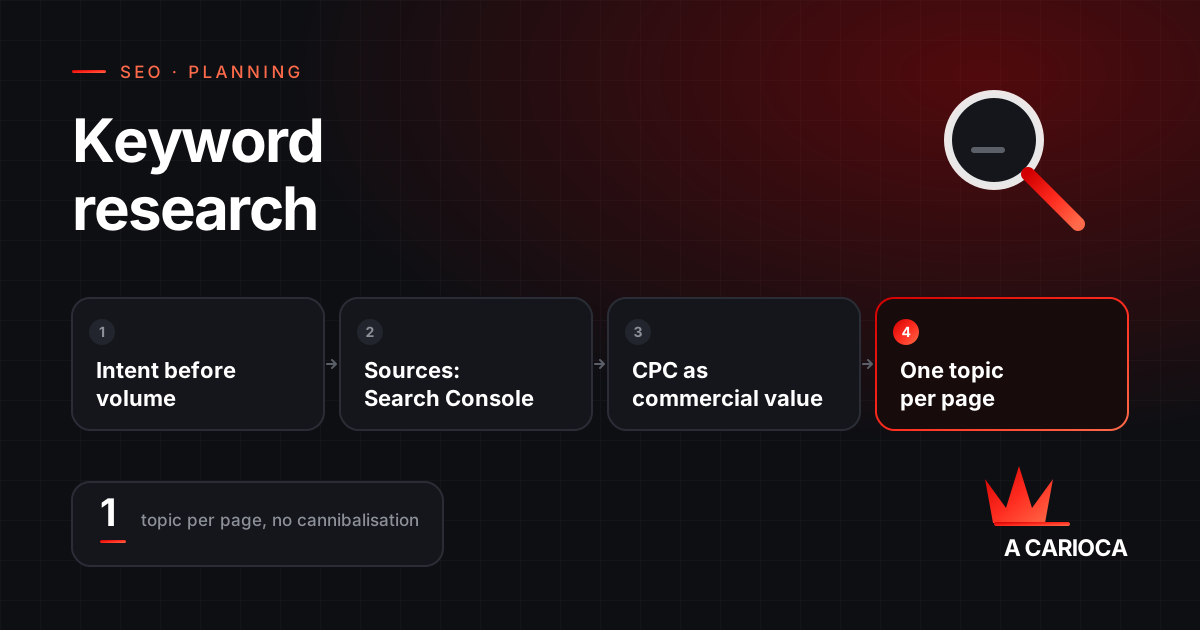
Keyword research is finding out what people type when looking for what you offer, understanding the intent of each term (informational, commercial, transactional or navigational) and mapping each topic to the page that should serve it. The main sources are Search Console, the Google Ads Keyword Planner, autocomplete, competitors and real customer questions. Volume is a reference; what decides is intent, commercial value (CPC is a good indicator) and the real chance of ranking. The output is a map of topics by page, one topic per page, reviewed every quarter.
In short
- The goal is not a list of terms by volume but a map of intents with one topic per page.
- Confirm intent by looking at what already ranks: the new page has to be the same type.
- Search Console, the Keyword Planner, autocomplete, competitors and your own sales conversations are the sources.
- Volume is an estimate; estimated CPC is the best free indicator of commercial value.
- Start with terms in positions 5 to 20 and transactional terms without a page; leave broad informational topics for last.
What changed in keyword research
Keyword research used to be a spreadsheet of terms sorted by volume. Today it is a map of intents: what the person wants to solve, where they are in the decision and what kind of page solves it. Three changes explain the difference:
- Google understands synonyms and context. There is no longer "the exact keyword"; there is the topic a page covers. Dozens of variations lead to the same page.
- AI answers and zero-click results. Broad informational terms ("what is SEO") get a direct answer on the results page or in assistants. The click goes to whoever answers a specific, complete question.
- Tool volume is an estimate. The numbers are bucketed, rounded and lagged. They are for comparing terms with each other, not for forecasting traffic.
The end goal is not a list but a map: every page of the site with the topic it should win and the questions it must answer. That map feeds content SEO and search campaigns.
Intent types and what each demands
| Intent | What the person wants | Examples | Page that serves it |
|---|---|---|---|
| Informational | To learn or understand something | what is remarketing, how google ads works | An article that answers completely |
| Commercial (investigation) | To compare options before deciding | best seo agency, seo vs google ads | Comparison, buying guide, service page with proof |
| Transactional | To hire or buy | google ads agency in miami, hire seo | Service or product page, with contact |
| Navigational | To reach a specific site | a carioca agency, google ads login | The official page; not worth contesting someone else's brand |
The rule that avoids the most common mistake: the page has to be the same type that already ranks for the term. If the top ten results are articles, a service page will not get in, however good. If they are service pages, an article neither converts nor ranks.
Where to find the terms
- Search Console. The most valuable and most ignored source: the queries the site already appears for, with impressions, clicks and position. Terms in positions 8 to 20 with many impressions are the fastest return.
- Google Ads Keyword Planner. Volumes (in ranges, without an active account) and related ideas. The bid estimate is a good indicator of commercial value: expensive terms are terms that convert.
- Autocomplete and "People also ask". They show how people phrase the search and which questions Google associates with the topic. Walk the alphabet after the term ("seo a", "seo b") to expand.
- Competitors. Which terms do the sites in the top positions rank for? Tools like Semrush, Ahrefs and Similarweb list them; without them, competitors' menus and blogs reveal the structure.
- Support, sales and CRM. The questions customers ask before hiring, in their own words. The source competitors do not have.
- Forums, communities and reviews. Reddit, groups, review comments: real language, unfiltered.
- AI assistants. Ask an assistant what someone would ask about your topic and watch the follow-up questions it suggests.
The metrics and how to read them
| Metric | What it indicates | Caution |
|---|---|---|
| Monthly volume | How many people search the term | Bucketed estimate; compare terms with each other, do not forecast |
| Difficulty | How strong the ranking sites are | Every tool calculates it differently; confirm by looking at the results page |
| Estimated CPC | What advertisers pay per click | The best free indicator of commercial value |
| Trend | Whether the search grows, falls or is seasonal | Google Trends shows the curve; declining terms do not deserve a new page |
| SERP features | Whether there are AI answers, videos, maps, products | Many features above the organic results reduce clicks |
| Current position | Where the site already sits (Search Console) | Terms in positions 5 to 20 are the fastest return |
A combined reading that works: moderate volume, high CPC, difficulty in line with the site's authority and a results page without features that steal the click. That is the term worth a page.
Grouping by topic and mapping to pages
With the raw list, the work is grouping. The criterion is intent, not word similarity: "seo agency" and "seo company" are the same topic; "seo" and "seo course" are not.
- Search the candidate terms and compare the results pages. If the same sites appear for two terms, they belong to the same page.
- Name the topic after the main term and list the variations and questions inside it.
- Assign each topic to an existing page or mark it as a new page. One topic per page.
- Check for cannibalisation: two topics pointing at the same page, or two pages for the same topic, must be merged or separated.
- Organise as pillar and satellites: the service page is the pillar; articles answering the topic's questions point to it and receive links from it.
| Topic | Intent | Page | Variations and questions |
|---|---|---|---|
| Remarketing | Informational | /en/blog/how-remarketing-works/ | what is remarketing, how remarketing works, remarketing vs retargeting |
| Remarketing service | Transactional | /en/services/remarketing/ | remarketing agency, remarketing management, hire remarketing |
| Is remarketing worth it | Commercial | new article or section on the pillar | does remarketing work, remarketing cost, remarketing for small business |
Prioritising: where to start
A complete map has more topics than any team can produce. The order of attack, from fastest return to slowest:
- Pages already ranking between positions 5 and 20. Improving content, title and internal links usually moves them within weeks.
- Transactional terms without a page. Each one is a missing service page; the traffic is small and the value is high.
- Commercial funnel questions. Comparisons and "is it worth it" serve people who are deciding.
- Informational topics with a specific question. Where there is still a click despite AI answers.
- Broad informational topics. Last: lots of volume, few clicks, heavy competition.
Documenting and maintaining
The research becomes a living document, usually a spreadsheet with these columns: topic, main term, intent, variations, questions, current page, proposed page, current position, priority, status and date of last review.
Review it every quarter against Search Console: new terms that appeared, pages that rose or fell and topics that lost demand. Research done once and filed away loses its validity within a year.
How this connects to the rest: the questions in the map feed the AI search optimization pages, which need complete, verifiable answers; the transactional terms feed Google Ads campaigns; and the brand and location terms feed local SEO. It is a map, not a report.